


How to appeal a UK visa refusal
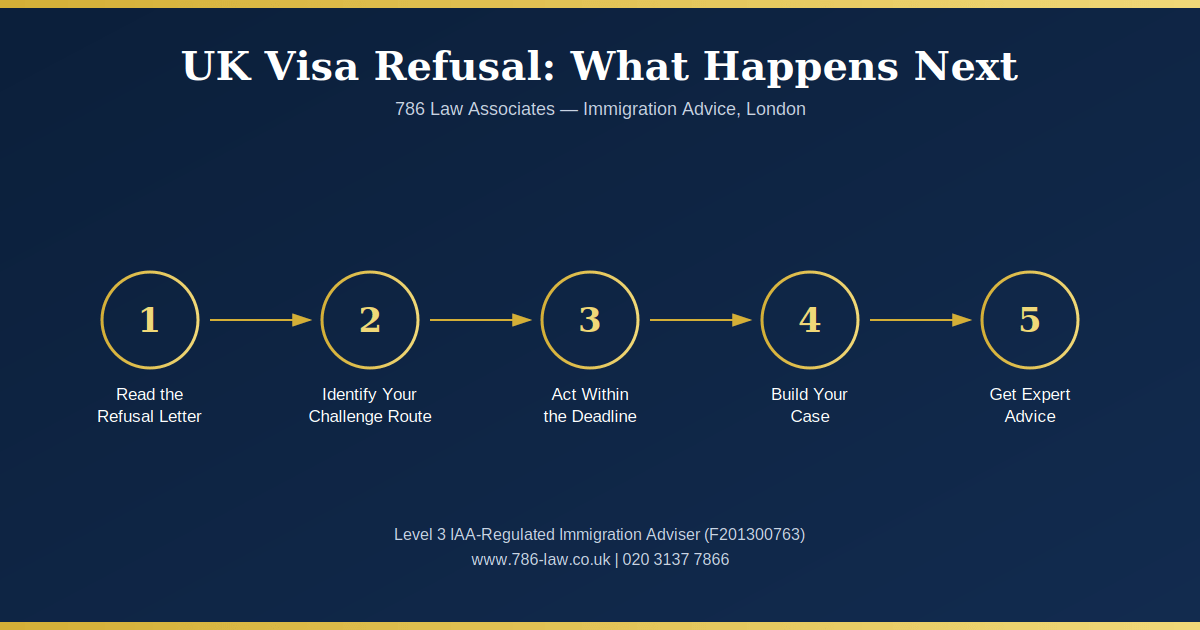
If your UK visa application has been refused, it can feel like the end of the road — but in many cases, it isn’t. Depending on the type of application and the reason for refusal, you may have the right to appeal, request an administrative review, or submit a fresh application. Understanding your options quickly is critical, because most routes have strict deadlines.
This guide walks you through what to do after a visa refusal, the different challenge routes available, and how to give yourself the best chance of success.
Step 1: Read the Refusal Letter Carefully
Every Home Office refusal decision comes with a letter explaining why the application was rejected. This letter is the single most important document you have, because it tells you:
- The exact grounds for refusal (e.g. suitability, eligibility, missing evidence, credibility concerns)
- The Immigration Rules or paragraphs relied upon
- Whether you have a right of appeal, a right to administrative review, or neither
Do not assume you know why you were refused — many refusals cite specific rule paragraphs and evidentiary gaps that are easy to misread. If anything in the letter is unclear, get advice before deciding your next step.
Step 2: Identify Which Challenge Route Applies to You
Not all refusals are challenged the same way. There are generally three routes:
1. Right of Appeal (First-tier Tribunal)
Certain refusals — particularly human rights claims, protection (asylum) claims, and some family/partner applications — carry a statutory right of appeal to the First-tier Tribunal (Immigration and Asylum Chamber). This is a formal legal process where a judge reviews the decision.
2. Administrative Review
Many points-based system refusals (such as Skilled Worker, Student, or Global Talent applications) don’t carry a right of appeal but do allow an administrative review. This means a different Home Office caseworker reviews the original decision for case-working errors — it is not a chance to submit new evidence.
3. Fresh Application
If neither an appeal nor an administrative review is available — or if the refusal was based on missing documents or a fixable error — submitting a fresh application with corrected or additional evidence may be the fastest route forward.
Getting this classification wrong wastes time and money, since each route has different forms, fees, and deadlines.
Step 3: Act Within the Deadline
Deadlines for challenging a refusal are short and strictly enforced:
- Appeals to the First-tier Tribunal typically must be lodged within 14 days (if you’re in the UK) of the decision, or 28 days if you’re outside the UK.
- Administrative reviews usually must be requested within 14 days of the decision (or 7 days in some detained cases).
Missing these deadlines can mean losing your right to challenge the decision entirely, and may affect your immigration status in the meantime. If you’re unsure how much time you have left, seek advice immediately — don’t wait.
Step 4: Build Your Case
Whether you’re appealing or reapplying, the strength of your case depends on addressing the refusal reasons directly:
- Gather supporting evidence that directly rebuts each point raised in the refusal letter
- Address credibility concerns with clear, consistent, and well-evidenced explanations
- Consider human rights or Article 8 grounds (right to family and private life) where relevant, especially in long-residence or partner/spouse cases
- Prepare a witness statement if you’re appealing to the Tribunal, as oral evidence often plays a significant role
For appeals to the Tribunal, presentation matters. A well-organised bundle of evidence, a clear legal argument, and (where applicable) representation at the hearing can significantly affect the outcome.
Step 5: Get Expert Advice Early
Visa refusal cases often turn on small but critical details — a misapplied rule, a misunderstood document, or an evidential gap that could have been closed with the right advice. Early input from an experienced immigration adviser can help you:
- Correctly identify which challenge route applies
- Avoid missing tight deadlines
- Strengthen your evidence before you submit
- Understand realistic chances of success before committing time and money
Common Reasons UK Visa Applications Are Refused
Understanding common refusal grounds can help you avoid repeat mistakes:
- Insufficient or inconsistent financial evidence
- Missing or incorrectly formatted supporting documents
- Doubts about the genuineness of a relationship (partner/spouse visas)
- Suitability issues (e.g. previous immigration breaches, criminality)
- Sponsor licence or compliance issues (for work visas)
- Failure to meet English language or maintenance requirements
Final Thoughts
A visa refusal isn’t necessarily final — but how you respond, and how quickly, makes a real difference. Whether your case calls for an appeal, an administrative review, or a fresh application, understanding your options and acting within the deadline gives you the strongest possible chance of a successful outcome.
If you’ve received a visa refusal and aren’t sure what to do next, speaking to a regulated immigration adviser as early as possible is the single most useful step you can take.